Understanding Stiffness and Its Role in Vibration Dampening
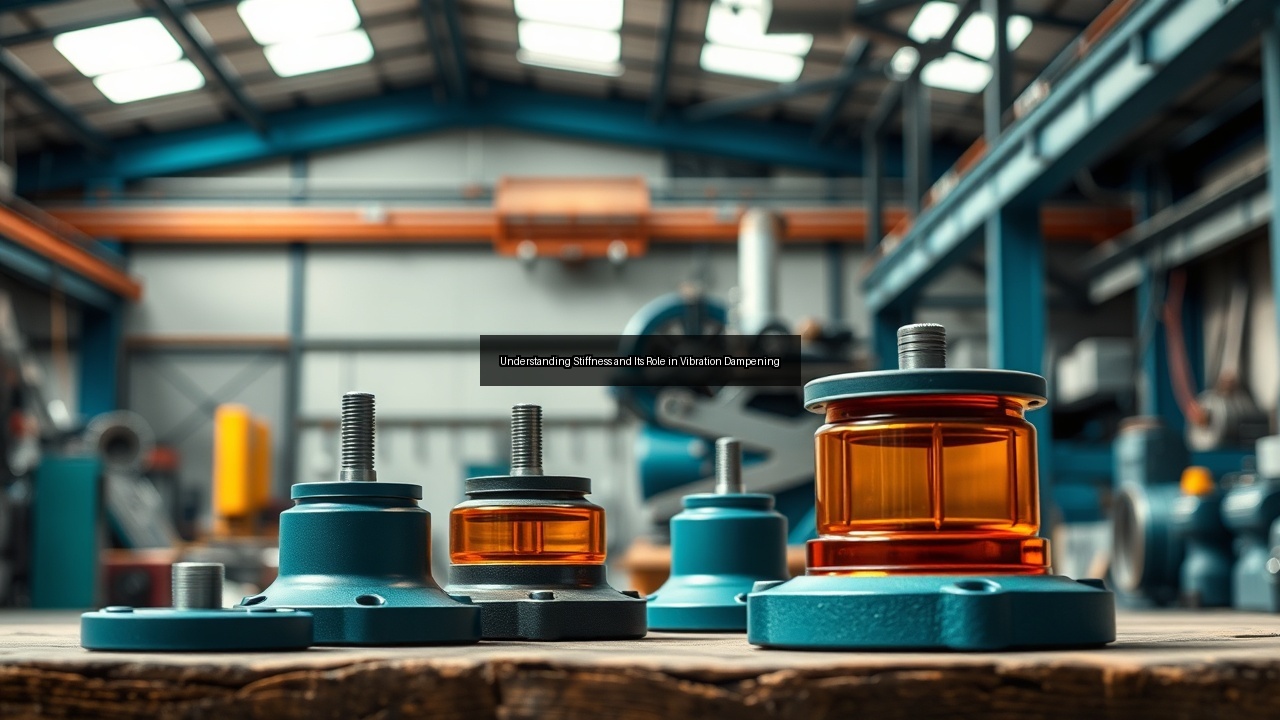
The Science of Stiffness in Vibration Control
Understanding Stiffness: A Key Parameter
Stiffness plays a crucial role in vibration control, serving as a fundamental parameter that influences how materials respond to vibrational forces. Defined as the resistance of an object to deformation, stiffness directly affects the behavior of structures and machinery under dynamic loads. In the context of anti vibration rubber mounts, stiffness determines how effectively these mounts can absorb and dissipate vibrations. A stiffer mount offers less displacement under load, which can enhance vibration isolation but may also transmit more noise. Conversely, softer mounts provide greater displacement, improving vibration damping but potentially allowing more vibrations to pass through. Selecting the right stiffness is essential for balancing vibration reduction and structural integrity in various applications.
The Role of Stiffness in Vibration Isolation
The effectiveness of vibration isolation hinges on the stiffness of the anti vibration rubber mounts used. When machinery operates, it generates vibrations that can propagate through structures, leading to unwanted noise and potential damage. Stiffer mounts limit these vibrations by providing a firm support that minimizes movement. This is particularly important in industrial settings, where large machines, such as generators and compressors, can produce significant vibrations. The right stiffness allows these mounts to absorb vibrational energy, preventing it from transferring to the surrounding environment. The choice of stiffness must align with the specific application; for instance, HVAC systems may require mounts with varying stiffness to adapt to different operational conditions while ensuring optimal vibration control.
Frequency Response and Stiffness Relationship
The relationship between frequency response and stiffness is pivotal in understanding how materials interact with vibrations. Every material exhibits a specific frequency response, which defines how it reacts to different frequencies of vibration. Stiffness influences this response significantly. A stiffer mount may perform better at higher frequencies, effectively reducing vibrations generated by fast-moving machinery. In contrast, softer mounts excel at isolating lower frequencies, which is often the case in applications involving heavy machinery or large engines. By analyzing the frequency response of anti vibration rubber mounts, engineers can optimize stiffness to achieve the desired level of vibration damping across a range of operational frequencies. This careful tuning ensures maximum efficiency in vibration isolation and noise control.
Types of Anti Vibration Rubber Mounts
Natural Rubber vs. Neoprene: Pros and Cons
When selecting anti vibration rubber mounts, the choice between natural rubber and neoprene often arises. Natural rubber, known for its excellent elasticity and vibration damping properties, provides superior performance in many applications. It can absorb vibrations effectively, making it ideal for machinery and construction equipment. However, natural rubber has limitations; it deteriorates under UV exposure and may not withstand extreme temperatures. Neoprene, a synthetic rubber, offers enhanced resistance to ozone, weathering, and temperature variations, making it suitable for outdoor applications, including marine environments. While neoprene may not absorb vibrations as effectively as natural rubber, its durability often outweighs this drawback in specific contexts. Ultimately, the choice depends on the specific application requirements, balancing factors such as vibration isolation, environmental resistance, and longevity.
Elastomeric Mounts for Machinery Applications
Elastomeric mounts have gained popularity in various machinery applications due to their superior vibration isolation capabilities. These mounts utilize a combination of rubber and metal components, providing a robust solution for dampening vibrations generated by engines, compressors, and other mechanical systems. The design of elastomeric mounts allows for the absorption of vibrations while maintaining structural integrity, which is essential for machinery longevity. Additionally, elastomeric mounts can be engineered to specific stiffness levels, catering to the unique vibration profiles of different equipment. Their versatility makes them suitable for a wide range of industries, from manufacturing to HVAC systems, where effective vibration control is paramount. Proper installation and selection of elastomeric mounts enhance overall system performance and ensure a quieter operational environment.
Wire Rope and Cone Mounts: Specialized Solutions
Wire rope and cone mounts offer specialized solutions for vibration isolation in demanding applications. Wire rope mounts are particularly effective in heavy-duty settings, such as industrial machinery and marine vessels, where they provide excellent vibration damping while supporting significant loads. The flexibility of wire rope allows for the absorption of multi-directional vibrations, making them suitable for complex machinery with varying operating conditions. On the other hand, cone mounts excel in applications requiring high stiffness and low deflection. Their design allows for efficient vibration isolation in environments where space is limited, such as within transformers and generators. By selecting the appropriate mount type, engineers can tailor vibration control solutions to meet specific operational demands, ensuring optimal performance and safety.
Applications of Anti Vibration Rubber Mounts
Vibration Dampening in HVAC Systems
Anti vibration rubber mounts play a vital role in HVAC systems by reducing vibrations generated by fans, compressors, and pumps. These mounts isolate the vibrations from the equipment, preventing them from transmitting through ducts and walls, which can lead to noise complaints and structural issues. Properly installed rubber mounts enhance the efficiency of HVAC systems by minimizing mechanical wear and tear, prolonging the lifespan of critical components. They also contribute to energy savings by allowing equipment to operate more smoothly, thus reducing energy consumption. In commercial buildings, effective vibration dampening leads to improved indoor air quality and greater occupant comfort. Engineers must consider factors such as height, diameter, and material choice when selecting mounts for HVAC applications to ensure optimal vibration isolation and noise control.
Noise Control in Marine Environments
In marine environments, controlling noise and vibrations is crucial for both safety and comfort. Anti vibration rubber mounts are essential in boats and ships, where engines and machinery can generate significant vibrations. By using specialized mounts, marine engineers can effectively dampen these vibrations, reducing noise levels within the vessel. This not only enhances the comfort of passengers and crew but also protects sensitive equipment from damage caused by excessive vibrations. Additionally, the use of neoprene and other durable materials ensures that the mounts withstand harsh marine conditions, including exposure to saltwater and extreme temperatures. Effective noise control in marine environments improves the overall experience for those on board and contributes to the longevity of the vessel’s mechanical systems.
Isolation Solutions for Generators and Compressors
Generators and compressors generate considerable vibrations during operation, making effective isolation solutions essential. Anti vibration rubber mounts serve as a critical component in these applications by significantly reducing the transmission of vibrations to the surrounding structures. Properly selected mounts can minimize noise levels and enhance the operational efficiency of these machines. For instance, in industrial settings, a well-designed vibration isolator can prevent damage to sensitive machinery and improve overall workplace safety. Additionally, the use of elastomeric mounts offers the flexibility needed to accommodate varying loads and operational conditions. In sectors like manufacturing and construction, the choice of isolation solutions directly impacts productivity and anti vibration pads equipment reliability, making it essential to invest in high-quality anti vibration rubber mounts.
Selecting the Right Anti Vibration Mount
Factors to Consider: Height and Diameter
Selecting the appropriate anti vibration mount requires careful consideration of various factors, particularly height and diameter. The height of the mount influences the amount of deflection it can provide, while the diameter affects its load-bearing capacity. A taller mount may offer better vibration isolation by allowing greater movement, but it must also be suited to the specific application to avoid excessive deflection. Conversely, a wider diameter can enhance stability and load distribution, preventing premature wear. Additionally, understanding the weight and operational dynamics of the equipment being mounted is critical in determining the right dimensions. Engineers must balance these factors to ensure optimal performance and effective vibration reduction in their specific applications, whether in machinery, HVAC systems, or marine environments.
Material Choices: Rubber vs. Stainless Steel
The choice of material significantly impacts the performance of anti vibration mounts. Rubber, commonly used for its excellent vibration damping properties, offers flexibility and resilience, making it ideal for various applications. Natural rubber provides optimal vibration isolation, while neoprene offers enhanced durability against environmental factors. Stainless steel, often used in conjunction with rubber components, adds structural strength and resistance to wear. Using a combination of materials can create a robust mount that balances vibration isolation and support. It’s essential to analyze the operational environment, including temperature fluctuations, exposure to chemicals, and load requirements, to select the best material combination for effective vibration control.
Common Misconceptions about Vibration Isolation
Several misconceptions surround vibration isolation that can lead to improper installation or selection of anti vibration mounts. One common belief is that all mounts provide equal vibration isolation, which is far from the truth. Different mounts exhibit varying levels of performance based on design, materials, and stiffness. Another misconception is that larger mounts always perform better; however, this can lead to over-engineering and unnecessary costs. In reality, the effectiveness of a mount depends on its design in relation to the specific application requirements. Understanding these misconceptions helps engineers make informed decisions that enhance vibration control and noise reduction, ultimately leading to improved equipment longevity and performance.