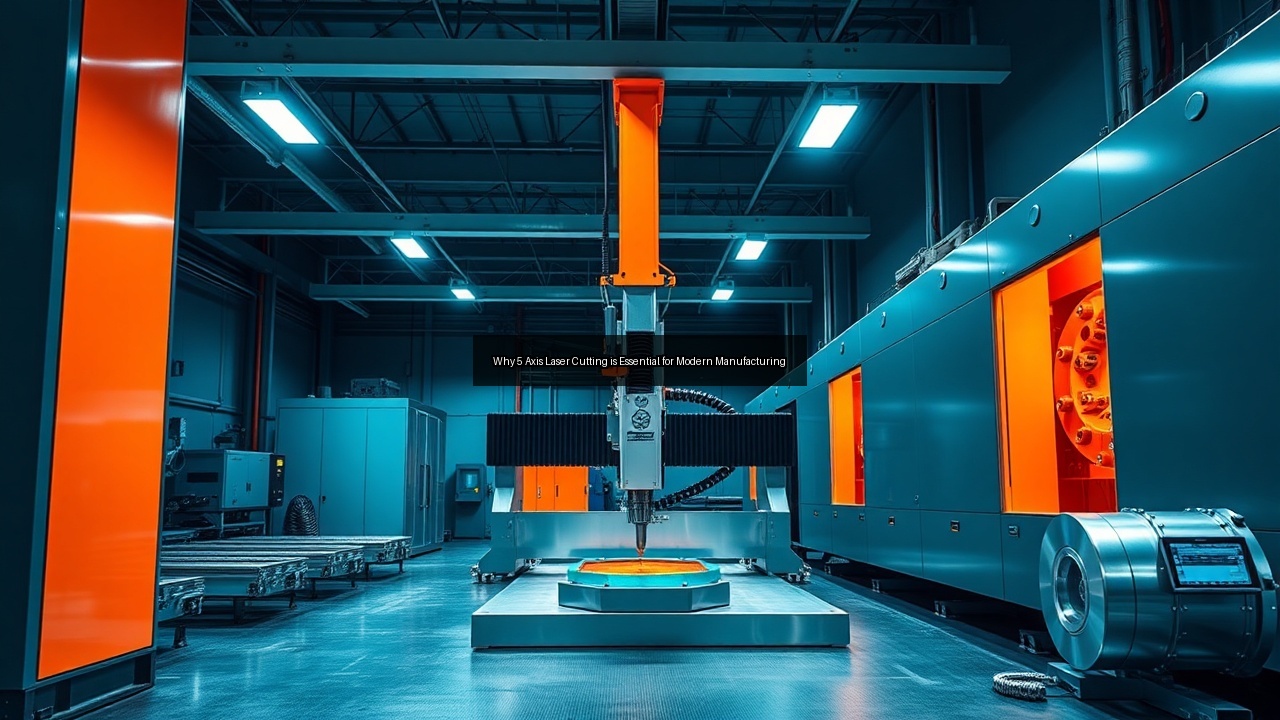
Why 5 Axis Laser Cutting is Essential for Modern Manufacturing
The Evolution of Laser Cutting Technology
A Brief History of Laser Cutting
Laser cutting technology has transformed the manufacturing landscape since its inception. The first laser was developed in the early 1960s, primarily for research purposes. By the late 1970s, industries began adopting laser cutting for metal fabrication. Early laser cutters operated on a two-dimensional plane, limiting their applications. However, as technology advanced, manufacturers sought ways to enhance precision and expand capabilities. Innovations led to the emergence of 5 axis laser cutting, which provides a significant leap in efficiency and versatility. This evolution reflects the ongoing demand for high-quality, precise manufacturing processes that can meet the intricate needs of various industries.
Introduction to 5 Axis Laser Cutting
5 axis laser cutting represents the pinnacle of laser cutting technology. Unlike traditional methods that restrict movement to the X and Y axes, 5 axis systems incorporate additional rotational axes. This feature allows laser cutters to approach materials from multiple angles, enabling complex shapes and intricate designs that were previously challenging to achieve. The ability to manipulate the laser beam's angle while maintaining high precision enhances the overall quality of the laser-cut products. This advancement positions 5 axis laser cutting as an essential tool in modern manufacturing, catering to the growing demand for customized and intricate 5 axis laser cutting services components across industries.
Comparison with Traditional Laser Cutting Techniques
Traditional laser cutting techniques primarily focus on two-dimensional cutting, which suits simple shapes and straightforward designs. However, as manufacturing demands increased for more complex geometries, the limitations of these methods became apparent. 5 axis laser cutting breaks through these constraints, allowing for three-dimensional designs that enhance product functionality and aesthetics. Additionally, the precision of 5 axis laser cutting services 5 axis systems significantly reduces material wastage, a critical factor in cost-effective manufacturing. While traditional methods remain relevant for certain applications, the versatility and efficiency of 5 axis technology have made it the preferred choice for advanced manufacturing solutions.
Applications of 5 Axis Laser Cutting in Modern Manufacturing
Industries Benefiting from 5 Axis Laser Cutting
5 axis laser cutting finds applications across various industries, revolutionizing how products are designed and manufactured. The automotive sector, for instance, utilizes this technology for producing intricate parts with tight tolerances, essential for vehicle safety and performance. Aerospace manufacturers also rely on 5 axis capabilities for crafting lightweight, high-strength components that meet stringent regulations. Other sectors, such as medical device manufacturing, benefit from the precision offered by 5 axis systems, allowing for the production of complex geometries required in surgical instruments. The versatility of 5 axis laser cutting extends to industries like HVAC and stamping services, where precision and efficiency are paramount.
Precision in Metal Fabrication and Engineering
In metal fabrication and engineering, precision is non-negotiable. 5 axis laser cutting excels in this regard, enabling manufacturers to achieve intricate designs with remarkable accuracy. The laser cutting process minimizes the risk of errors, ensuring that components fit together seamlessly. This precision not only enhances the functionality of the end product but also reduces the need for secondary machining processes, leading to significant cost savings. For engineers, the ability to produce complex shapes without compromising on quality means more innovative designs and greater flexibility in production. As industries continue to push the boundaries of engineering, 5 axis laser cutting remains an invaluable asset.
Role in HVAC and Stamping Services
The HVAC industry benefits significantly from 5 axis laser cutting technology, particularly in the manufacturing of ductwork and components that require precise dimensions and airflow characteristics. Traditional cutting methods often struggle to deliver the necessary accuracy for these applications. Conversely, 5 axis systems can produce complex parts that ensure optimal performance in HVAC systems. In stamping services, 5 axis laser cutting enables manufacturers to create intricate dies and molds, improving the efficiency of the stamping process. The ability to produce high-quality components in a single setup reduces production time and costs, making 5 axis laser cutting an essential technology in these fields.
Advantages of 5 Axis Laser Cutting
Enhanced Precision and Accuracy
5 axis laser cutting delivers unparalleled precision and accuracy, a critical advantage in manufacturing. The ability to manipulate the laser beam from multiple angles ensures that cuts are clean and exact, minimizing the need for post-processing. This high level of accuracy is especially important in industries where tolerances are tight and quality control is paramount. Engineers and designers can rely on the consistency provided by 5 axis systems, knowing that their specifications will be met without compromise. This enhanced precision not only improves product quality but also boosts the overall efficiency of the manufacturing process.
Versatility in Material Processing
5 axis laser cutting showcases remarkable versatility in material processing. It effectively handles a wide range of materials, including metals, plastics, and composites, making it suitable for various applications. Whether working with stainless steel, aluminum, or intricate plastics, 5 axis systems adapt seamlessly to different materials, providing consistently high-quality results. This versatility allows manufacturers to diversify their product offerings without investing in multiple machines. Additionally, the ability to switch between materials quickly enhances production flexibility, enabling manufacturers to respond swiftly to changing market demands.
Efficiency in Production and Cost Reduction
Efficiency drives profitability in modern manufacturing. 5 axis laser cutting significantly enhances production efficiency by reducing setup times and minimizing material waste. The advanced technology allows for faster cutting speeds without sacrificing quality, streamlining the entire manufacturing process. By reducing the number of secondary operations required, manufacturers can lower labor costs and increase output. The combination of speed and precision leads to shorter lead times, making it easier for companies to meet customer demands swiftly. Overall, the integration of 5 axis laser cutting into manufacturing processes results in substantial cost reductions and improved profitability.
Future Trends in 5 Axis Laser Cutting
Integration with CNC Machining and CAM Software
The future of 5 axis laser cutting lies in its integration with CNC machining and advanced CAM software. This synergy allows for a seamless workflow from design to production, enhancing overall efficiency. By incorporating CAM software, manufacturers can optimize cutting paths and strategies, ensuring the most effective use of materials and time. This integration also facilitates real-time monitoring and adjustments, further improving precision and reducing downtime. As industries increasingly adopt automation and smart manufacturing practices, the role of 5 axis laser cutting will expand, becoming a central component of integrated production environments.
Advancements in Laser Cutting Equipment
Ongoing advancements in laser cutting equipment continue to shape the capabilities of 5 axis technology. New developments focus on increasing cutting speeds, improving beam quality, and enhancing system reliability. Innovations such as fiber lasers and high-power CO2 lasers enable faster and more efficient cutting of thicker materials. Additionally, manufacturers are introducing more compact and user-friendly designs, making 5 axis systems accessible to a broader range of businesses. These advancements position 5 axis laser cutting as a future-proof solution, ensuring manufacturers remain competitive in an ever-evolving marketplace.
Sustainability and Environmental Considerations
Sustainability plays a crucial role in the future of manufacturing, and 5 axis laser cutting aligns well with these goals. The precision of laser cutting reduces material waste, an essential factor in responsible manufacturing practices. Moreover, advancements in lasers contribute to energy efficiency, lowering the carbon footprint associated with production. As environmental regulations tighten and consumer preferences shift towards sustainable practices, 5 axis laser cutting offers a viable solution. Manufacturers can leverage this technology not only to enhance their operational efficiency but also to demonstrate their commitment to sustainability, appealing to environmentally conscious consumers.